Why Timing Matters
Dutch elm disease progresses through the vascular system in a pattern that is strongly influenced by the season and by how far the infection has advanced when first identified. An infection detected while it is still confined to one or a few branches — before it has moved into the main trunk — may still allow for effective management through targeted pruning. Once the fungus reaches the root crown or establishes in the main stem, the prognosis for the tree changes significantly.
This makes the late spring and early summer period — when beetle activity peaks and new infections are most likely to initiate — the most important time for careful monitoring. A tree inspected regularly during May and June has a better chance of being assessed before an infection becomes advanced.
Signs That Warrant Contacting an Arborist Promptly
The following observations should lead to arborist contact without delay — ideally within a few days of observation during the active growing season:
- One or more branches showing sudden wilting (flagging) with curled, yellowing leaves while the rest of the tree appears unaffected
- Brown or olive-green streaking visible in sapwood after cutting a twig from a symptomatic branch
- Flagging appearing on multiple separate branches within the same week
- Rapid progression of discolouration from upper canopy toward the main trunk
- Visible bark beetle exit holes (small round or oval perforations) on symptomatic branches
If flagging is spreading rapidly — particularly if new symptomatic branches are appearing on different parts of the canopy within days of each other — contact your municipality's urban forestry office in addition to an arborist. Many Canadian municipalities maintain DED monitoring programs and can advise on whether the tree falls under local management protocols.
Signs That Warrant Assessment but Are Less Urgent
Some observations are worth documenting and discussing with an arborist at the next available appointment, but do not necessarily indicate active DED:
- Gradual yellowing of leaves across a broad section of canopy (more consistent with drought or soil issues)
- Leaf scorch on outer canopy edges during dry periods
- Minor defoliation from elm leaf beetle feeding (look for skeletonized leaves rather than wilting)
- Dead wood in upper canopy that has been present since the previous season
- Small areas of bark damage from woodpecker or other wildlife activity
These conditions may have distinct causes from DED and may warrant different responses. An arborist can assess them in context of the tree's overall health history.
What an Arborist Evaluates
A certified arborist conducting a DED assessment will typically follow a structured evaluation. The process generally includes:
Visual Canopy Inspection
The arborist identifies and maps symptomatic areas of the canopy — which branches show wilting, where the pattern of discolouration appears to originate, and whether the distribution is consistent with root graft transmission (typically appearing in clusters near ground level first) or beetle-mediated infection (which often initiates higher in the canopy).
Twig and Branch Sampling
Twig sections from the margins of symptomatic areas are cut and examined for sapwood discolouration. This is the primary field diagnostic step. If discolouration is present, the arborist may collect material for laboratory confirmation through fungal culturing or molecular assay, particularly if the assessment is to be used in a formal report or as the basis for municipal action.
Root Collar Examination
The arborist examines the base of the tree and surrounding soil conditions. Signs of root graft activity — for example, symptoms appearing in a neighbour's tree in the same direction as proximity to an infected elm — are noted. Soil conditions that may predispose the tree to secondary stress (compaction, drainage issues, grade changes) are also assessed.
Beetle Activity Assessment
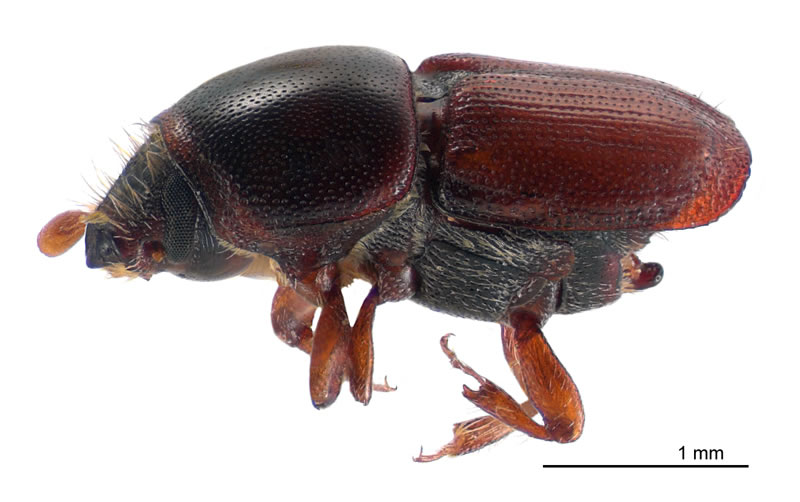
Examination of dead wood on or near the tree for gallery patterns, exit holes, and frass helps establish whether bark beetles are active in the vicinity. This context informs the risk of continued transmission.
Fungicide Injection as a Management Option
For high-value elm specimens — mature street trees, heritage elms on private property, or trees in landscapes where replacement is not practical — preventive or therapeutic fungicide injection may be discussed. The primary materials used in Canada are based on propiconazole or thiabendazole, injected under pressure into the root flare.
Fungicide injection is not a guarantee against infection, and its effectiveness depends on timing, tree health, and the extent of any existing infection. It is generally more effective as a preventive measure than as a therapeutic one after infection is confirmed. Arborists certified in this procedure can advise on whether the approach is appropriate for a specific tree and site.
How to Find a Certified Arborist in Canada
The International Society of Arboriculture (ISA) maintains a public directory of certified arborists searchable by postal code. ISA Certified Arborists have passed a competency examination and maintain continuing education requirements. Some provinces have additional credentials — such as the Ontario ISA certification — that indicate familiarity with regional tree health conditions.
Many Canadian municipalities with active elm management programs — including Winnipeg, Saskatoon, Calgary, and Edmonton — have urban forestry departments that can provide guidance on local DED protocols and, in some cases, assist with assessment of suspected cases on private property. Reporting a suspected case through the city's forestry department is recommended even when a private arborist is also being consulted, as municipal records of disease incidence inform broader management responses.
What to Have Ready When Contacting an Arborist
- The approximate age and size of the tree, if known
- When you first noticed the symptoms and how they have changed
- Photos showing the symptomatic branches and overall canopy, taken from multiple angles
- Any relevant site history: recent construction, soil disturbance, drought, or flooding
- Whether any neighbouring elms have died or shown similar symptoms recently
After the Assessment
If the arborist confirms a DED diagnosis, they will typically outline options based on the extent of infection, the tree's structural condition, and applicable local regulations. Possible recommendations may include targeted pruning of symptomatic branches (where this is still a viable option), full removal and appropriate disposal of the tree and its wood, fungicide injection for neighbouring at-risk elms, or reporting to the municipal forestry department if this has not already occurred.
Movement and disposal of elm wood following diagnosis is subject to CFIA regulations and local bylaws in many parts of Canada. An arborist familiar with local requirements can advise on compliant disposal options.